Launch offer — valid today only

📄 Digital book in PDF · read it on your phone or print it

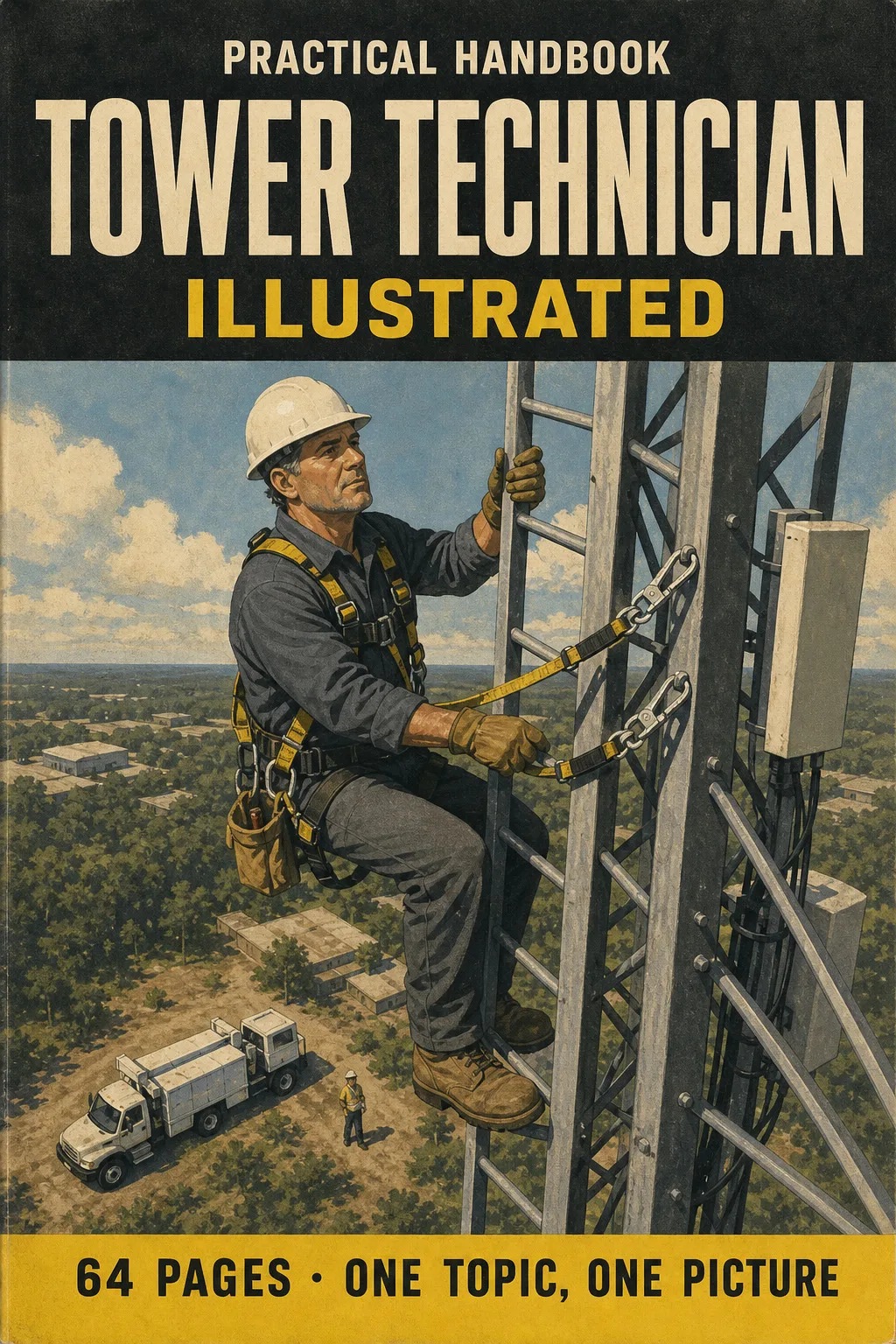
The TTT-1 Written Exam in Drawings: Fall Protection, Rigging and RF Safety Every Rule on Its Own Page

Tower anatomy, the harness and its D-rings, the 3 OSHA fall arrest limits, fall clearance, 100% tie-off, sling angles and WLL, RF limits and rescue. Each topic gets its own page: the drawing first, then what you need to remember. 64 illustrated pages.

GET THE ILLUSTRATED TTT-1 BOOK

🔒 Secure checkout · PDF by email · 30-day guarantee

Every topic, its own pageEach rule drawn, with the explanation right next to it
64 illustrated pages8 parts, from the 3 tower types to the night-before checklist
Up-to-date sourcesOSHA 29 CFR 1926 and 1910, ANSI/ASSP Z359 and FCC RF rules
PDF by emailFormat

Look Inside the Book

Every page has one big drawing and a box with the numbers and steps you need to know:

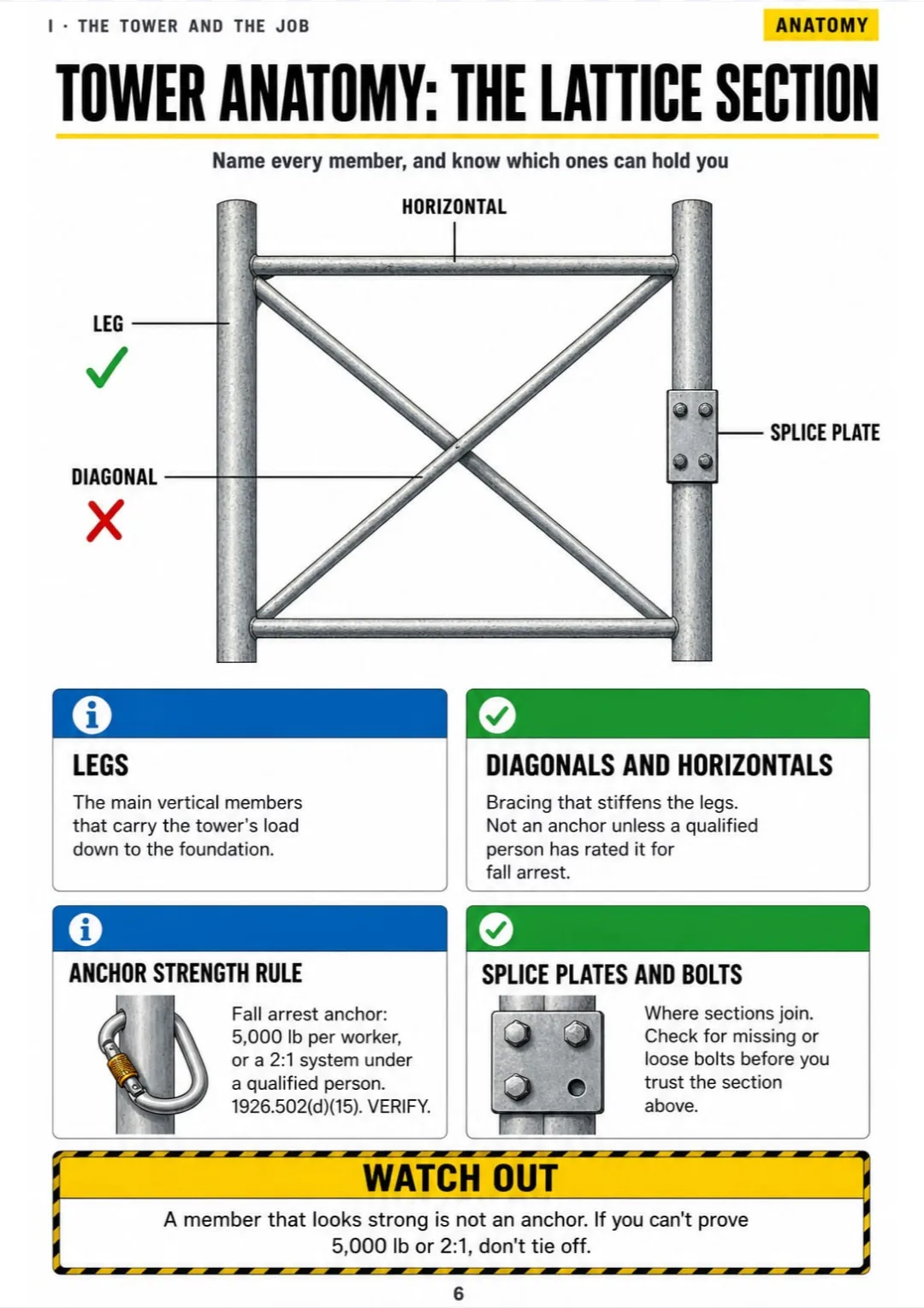
Legs, diagonals, horizontals and splice plates labeled, plus the 5,000 lb anchor rule.
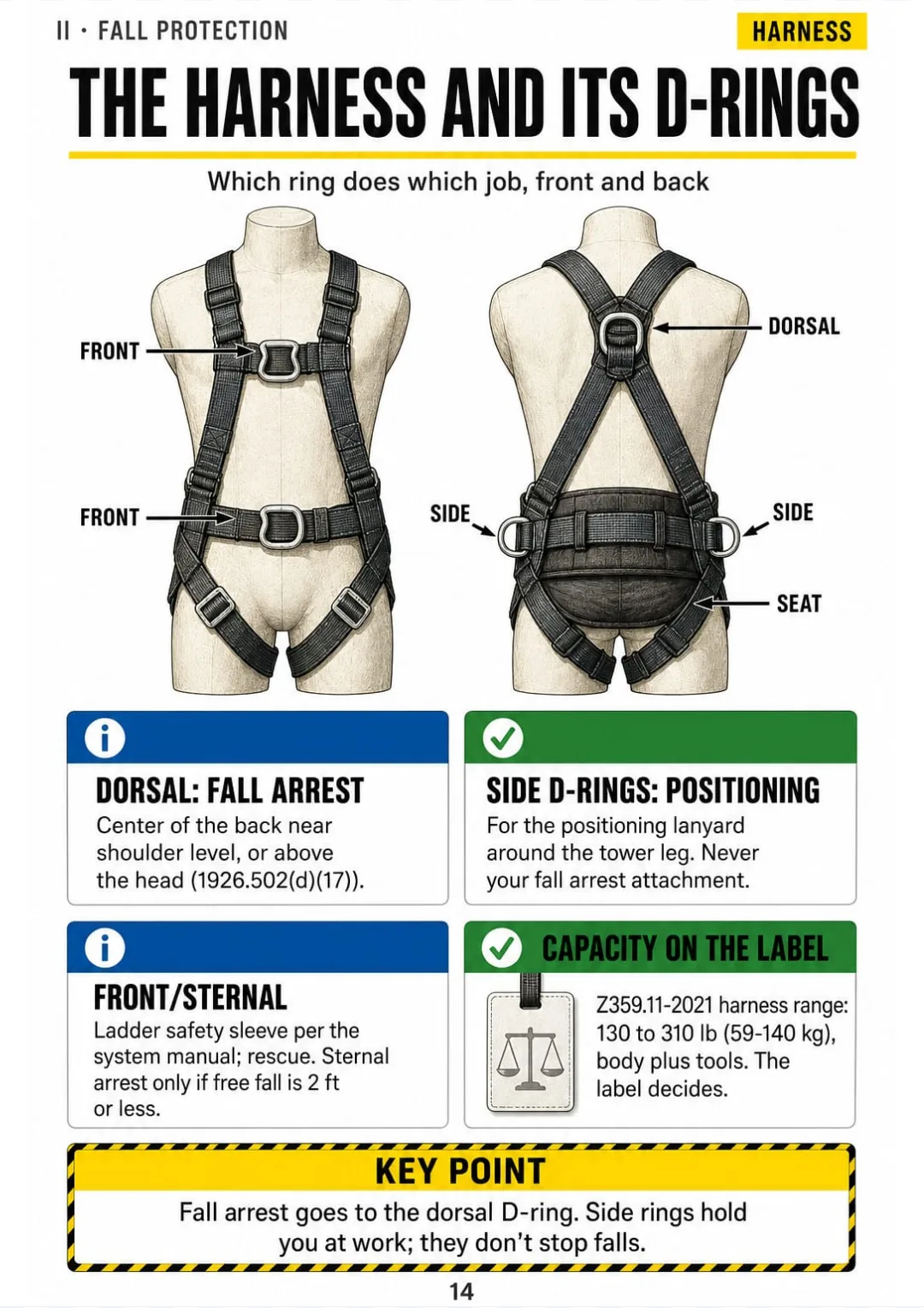
Dorsal, side, front and seat: each harness ring has one job.
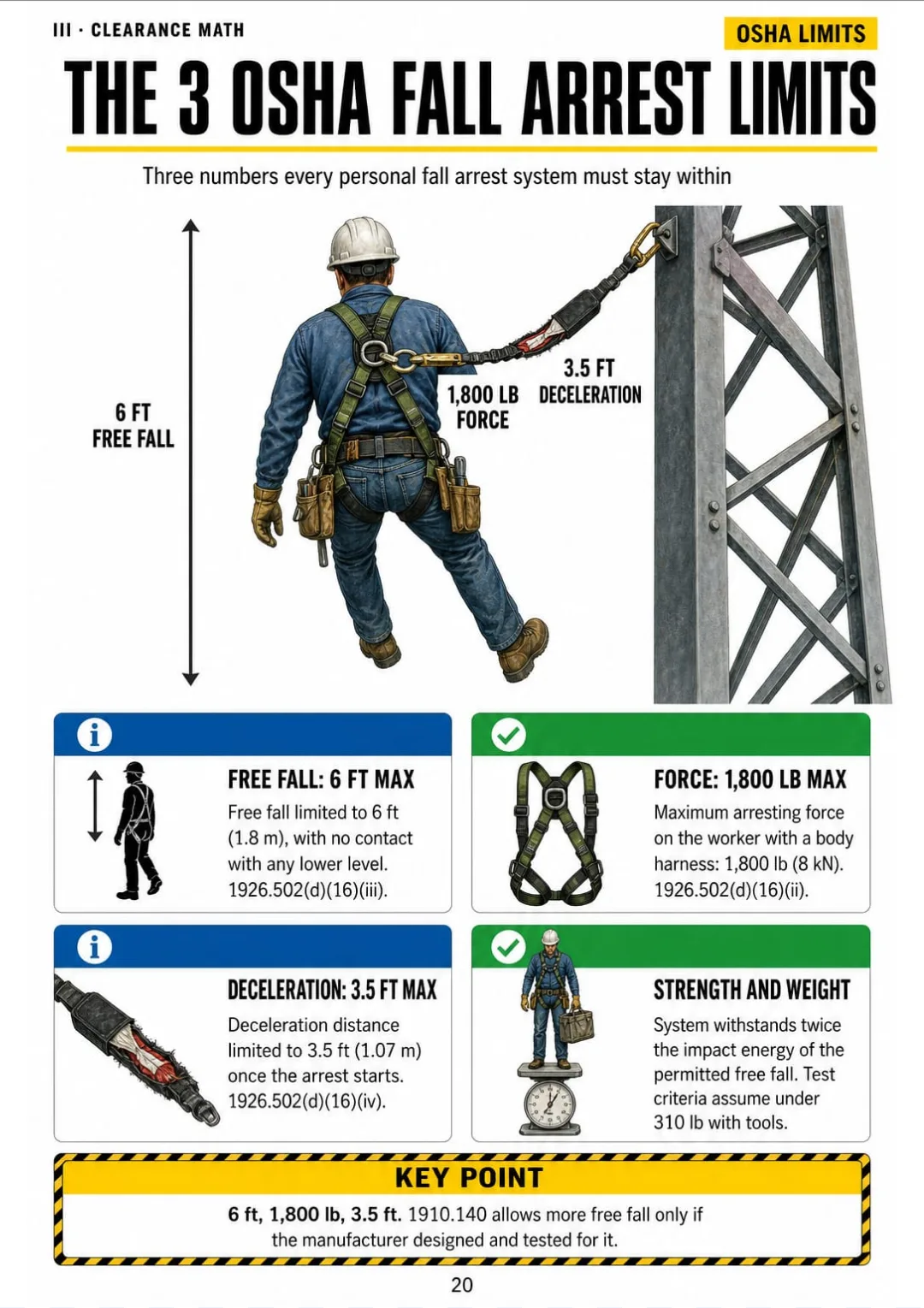
6 ft free fall · 1,800 lb force · 3.5 ft deceleration, drawn on one falling climber
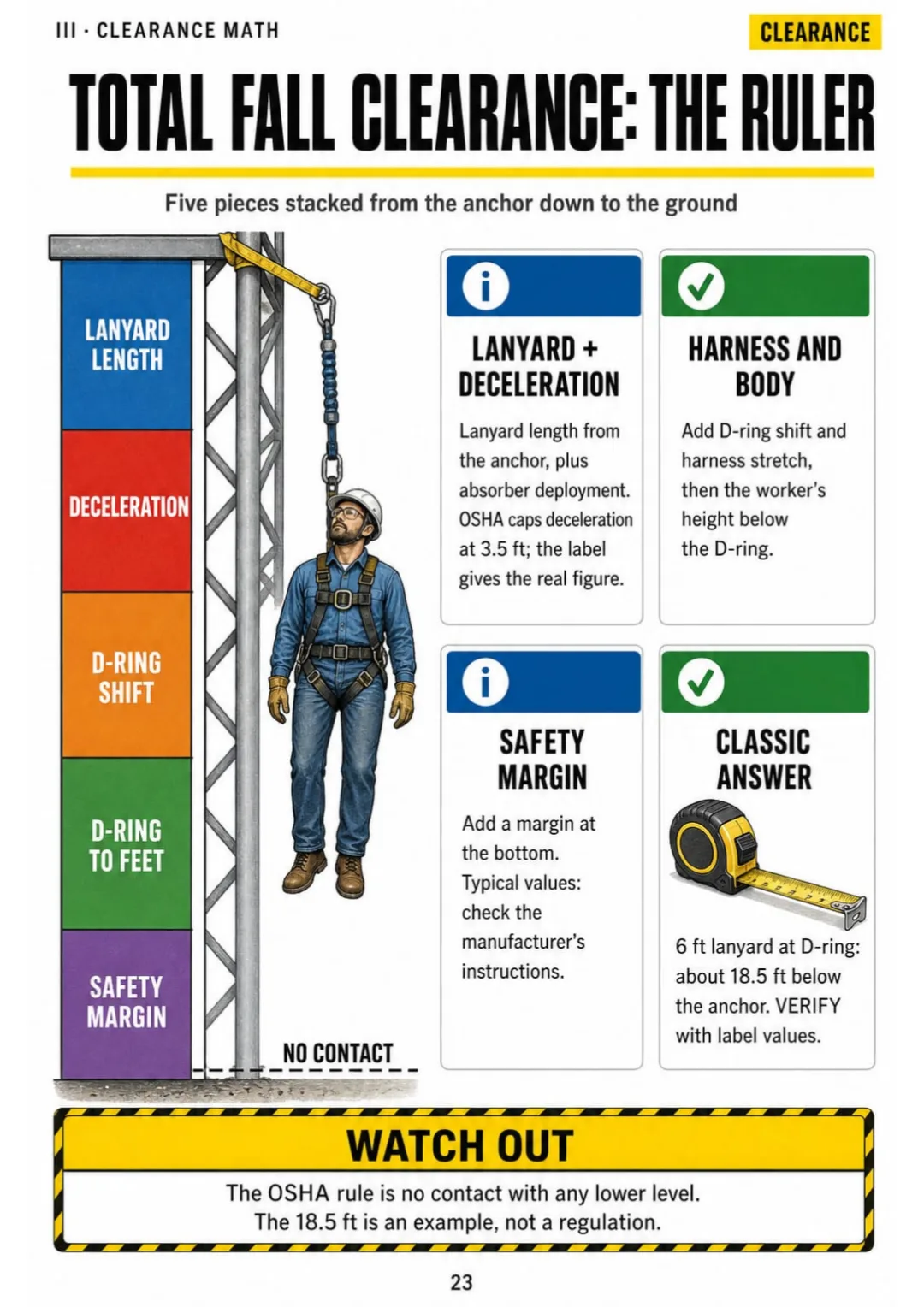
Lanyard length + deceleration + D-ring shift + D-ring to feet + margin = clearance below the anchor
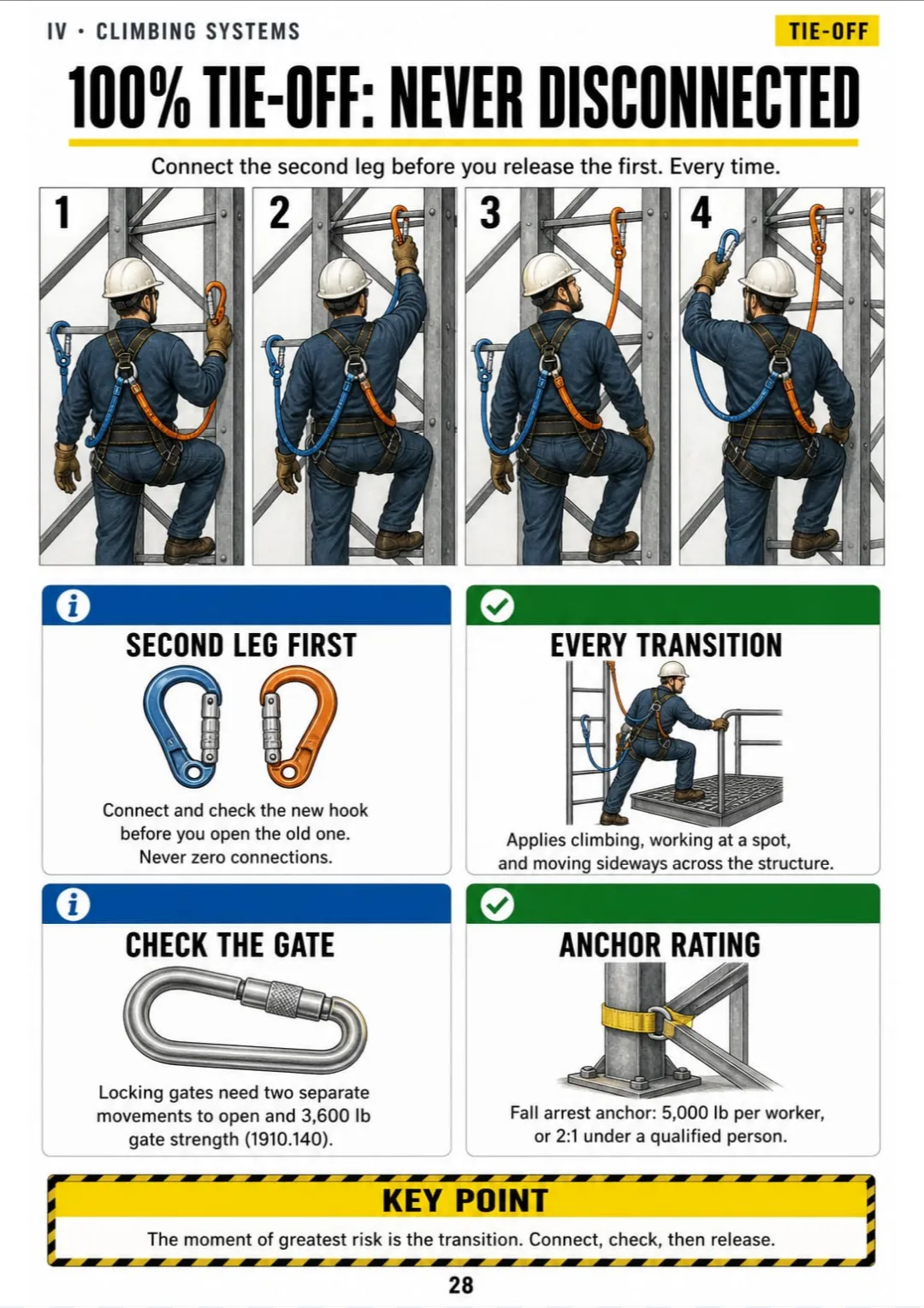
100% tie-off in 4 steps: connect, check, then release the old hook.
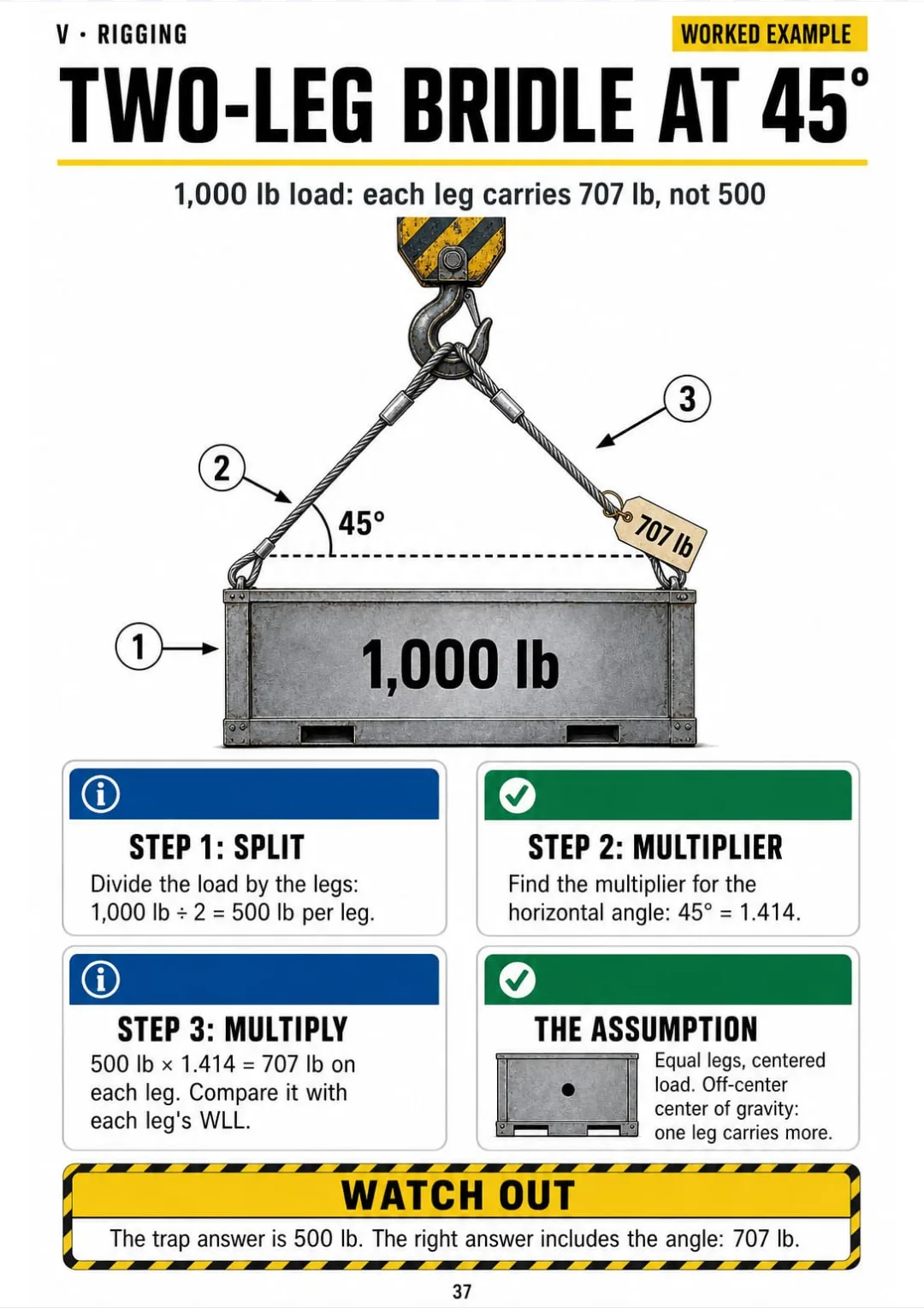
1,000 lb at 45°: 500 × 1.414 = 707 lb per leg, in 3 steps
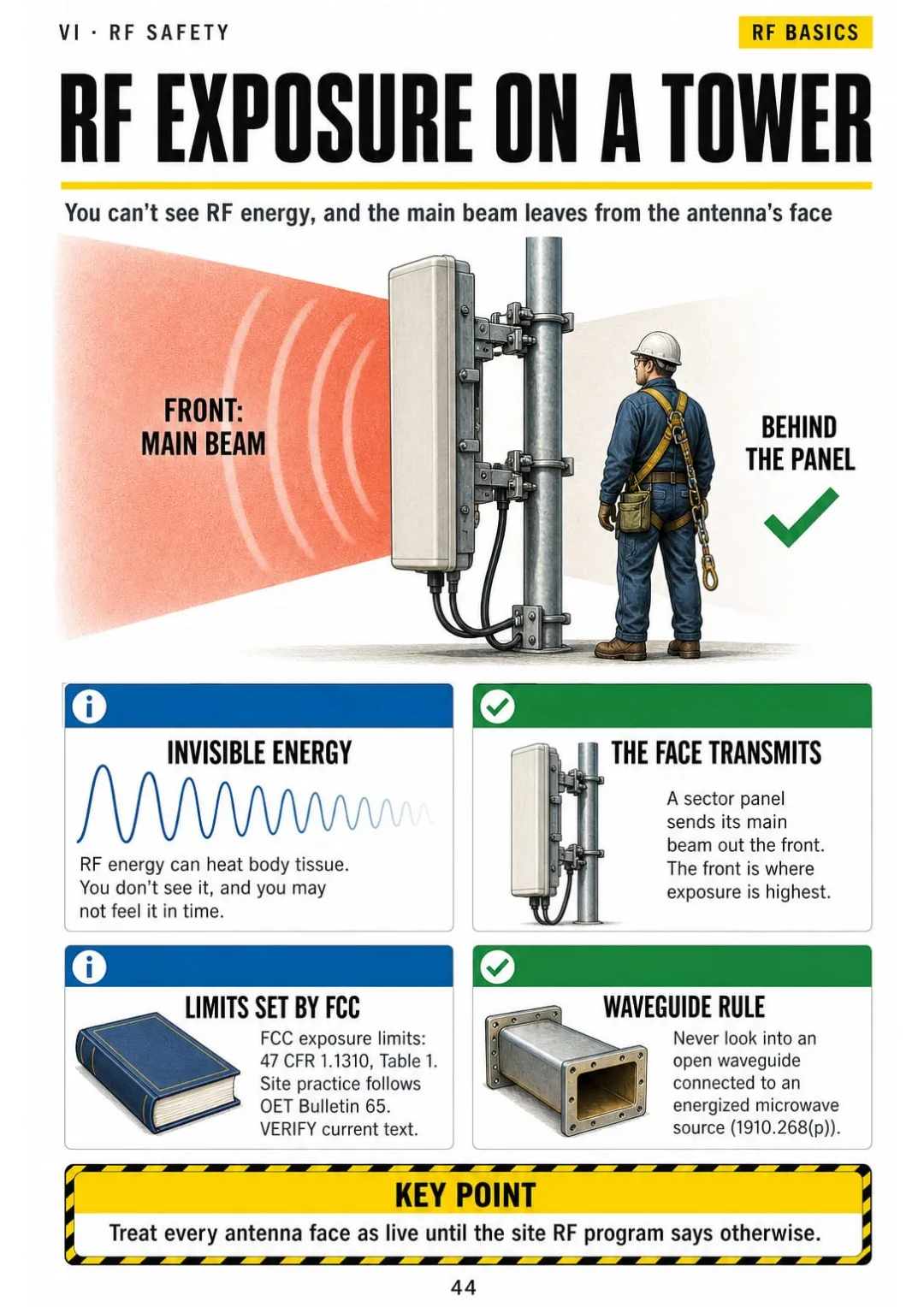
Main beam in front, low exposure behind: the panel antenna drawn from above
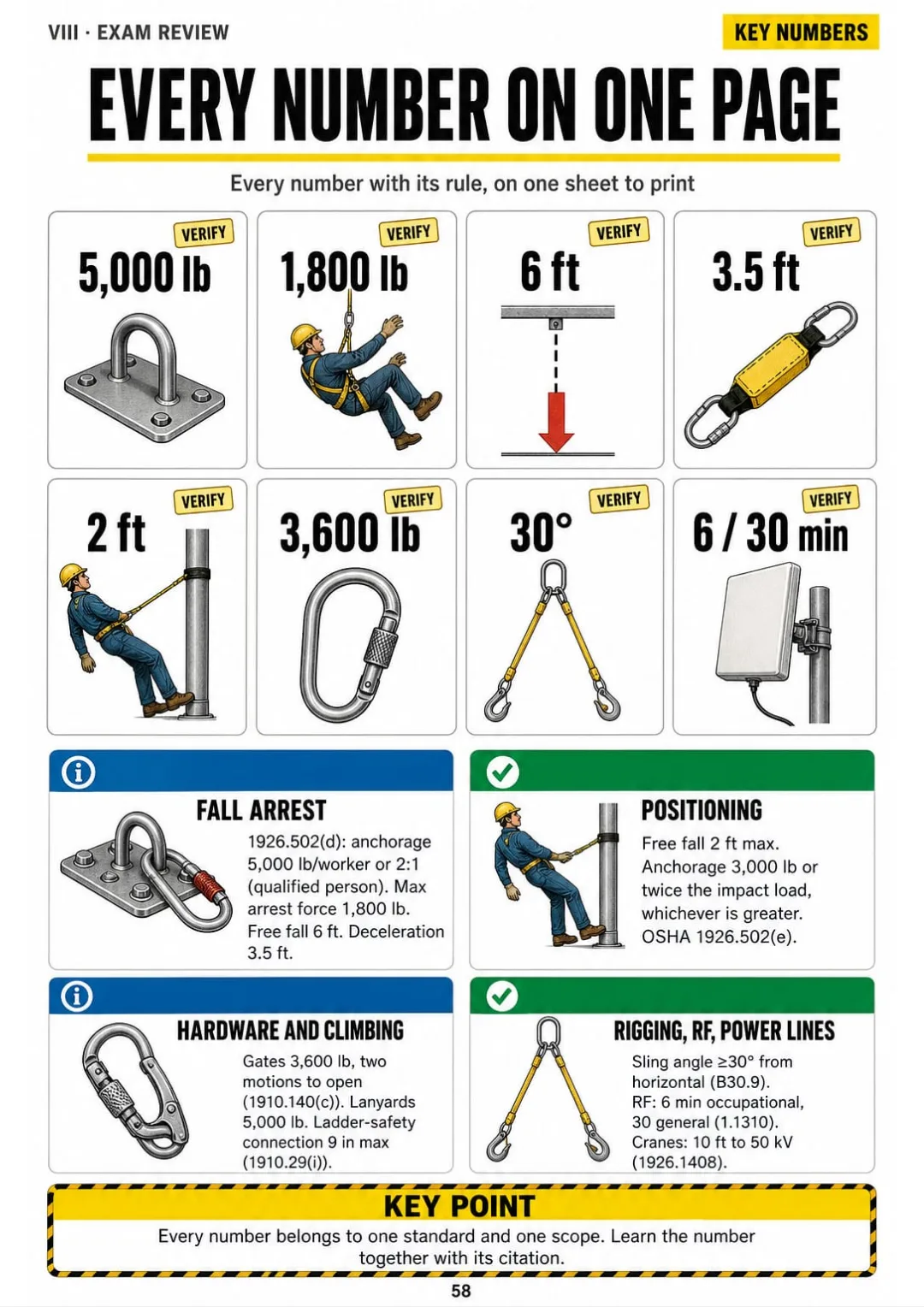
5,000 lb · 1,800 lb · 6 ft · 3.5 ft · 2 ft · 3,600 lb · 30° · 6/30 min, each with its citation

Swipe to see more →

These are real pages from the book. The table of contents is the full one: 8 parts and 60 topics.

The Problem Isn't You. It's How It Was Explained to You.

You have a practice question in front of you: max free fall, max arresting force, max deceleration distance. Three numbers. You went over them last week, and now they all run together.

No surprise there. The regulation buries them in long sentences, between paragraph numbers and exceptions, with nothing to look at and nothing to hang them on.

6 ft free fall · 1,800 lb force · 3.5 ft deceleration, drawn on one falling climber

In the book, those limits are one page: one falling climber, with 6 ft, 1,800 lb and 3.5 ft marked right on the drawing, each one where it happens: before the lanyard catches, at the harness, and while the absorber stretches.

Every topic works the same way: the harness and its D-rings, the clearance ruler, 100% tie-off, the two-leg bridle at 45°, the FCC RF limits. Each one on its own page.

You see where each number sits, you understand why it's there, and you answer the question without going back to the CFR.

COMPARE FOR YOURSELF

Same Topic, Two Ways to Study It

THIS
  • The manual: line after line
  • D-rings and connectors explained only in words
  • You show up to the exam with doubts
A full-body harness shall incorporate attachment elements designated for specific applications. The dorsal D-ring, located between the shoulder blades, is the attachment element intended for connection to a personal fall arrest system. Side D-rings, positioned at the hips, are intended exclusively for work positioning and shall not be employed for fall arrest. Sternal or front attachment elements may be utilized for ladder safety systems and certain rescue applications, while seat or suspension attachments are designated for suspended work in accordance with manufacturer instructions and applicable standards.
FOR THIS
  • Each D-ring in one drawing
  • What each ring is for, in a box
  • You see it and you get it
Dorsal, side, front and seat: each harness ring has one job.
CONTENTS

Take a Look at the 8 Parts and 60 Topics

The tower and the job, fall protection basics, fall clearance math, climbing systems and 100% tie-off, rigging and WLL, RF safety, site hazards and rescue, and an exam review: 64 pages, all illustrated.

IThe Tower and the Job · pp. 5-10
  1. The 3 Tower Types: Self-Supporting, Guyed, Monopole
  2. Tower Anatomy: Legs, Diagonals, Horizontals
  3. Guy Wires, Anchors and Guy Levels
  4. Antennas, Mounts, Lines and Waveguide Bridge
  5. Who Does What on Site: Climber, Ground Hand, Competent Person
  6. The Rules That Apply: OSHA, Z359, A10.48, TIA-222
IIFall Protection Basics · pp. 11-19
  1. The ABCs: Anchorage, Body Support, Connector
  2. Anchorage Strength: 5,000 lb or a 2:1 Safety Factor
  3. Fall Arrest vs. Positioning vs. Restraint
  4. The Full-Body Harness and Its D-Rings
  5. Fitting the Harness the Right Way
  6. Connectors: Snap Hooks and Carabiners
  7. Lanyards: Shock-Absorbing, Twin-Leg and Positioning
  8. Energy Absorbers: 6-ft and 12-ft Free Fall Classes
  9. Self-Retracting Lifelines: Class 1, Class 2 and Leading Edge
IIIFall Clearance and Fall Factor Math · pp. 20-27
  1. The 3 OSHA Fall Arrest Limits
  2. Free Fall Distance: Where the Fall Starts
  3. Fall Factor: Free Fall ÷ Lanyard Length
  4. Total Fall Clearance: The Vertical Ruler
  5. Worked Example: 6-ft Shock-Absorbing Lanyard
  6. Worked Example: SRL Anchored Overhead
  7. Swing Fall: The Hidden Clearance
  8. Clearance Mistakes That Cost Points
IVClimbing Systems and 100% Tie-Off · pp. 28-33
  1. 100% Tie-Off: Never Disconnected
  2. Ladder Safety Systems: Cable and Rail
  3. Climbing a Lattice Leg With a Twin-Leg Lanyard
  4. Positioning at the Work Spot
  5. Rope Access, Rope Grabs and Vertical Lifelines
  6. Inspecting Fall Gear Before Every Use
VRigging and Working Load Limits · pp. 34-43
  1. WLL, Breaking Strength and Design Factor
  2. Sling Types and Hitches
  3. Sling Angle: The Load Grows as the Angle Drops
  4. Worked Example: Two-Leg Bridle at 45°
  5. Shackles: Screw Pin, Bolt Type, Side Loading
  6. Blocks and Pulleys: Load on the Anchor
  7. Gin Poles, Capstan Hoists and Load Lines
  8. Wire Rope and Synthetic Rope Inspection
  9. The Rigging Plan and Its Classes
  10. Hand Signals and Communication During a Lift
VIRF Safety · pp. 44-50
  1. What RF Exposure Is and Why It Matters on a Tower
  2. Occupational vs. General Population Limits
  3. RF Signs and Their Colors
  4. Distance, Time and the Main Beam
  5. Personal RF Monitors
  6. Power-Down and Lockout/Tagout for Transmitters
  7. Multiple Carriers on One Structure
VIISite Hazards, Weather and Rescue · pp. 51-57
  1. Job Hazard Analysis Before the Climb
  2. Wind, Ice and Lightning Limits
  3. Overhead Power Lines and Electrical Hazards
  4. Falling Object Zone and Dropped Tools
  5. Suspension Trauma: Why Time Matters
  6. The Written Rescue Plan
  7. Self-Rescue and Assisted Rescue
VIIIExam Review · pp. 58-64
  1. Every Number on One Page
  2. The Clearance Calculation in 5 Steps
  3. The Rigging Calculation in 3 Steps
  4. Terms That Get Mixed Up
  5. The Most Frequent Mistakes in Exam Questions
  6. How the Written Exam Questions Read
  7. The Night-Before Checklist

One Page, One Topic, All Clear

Think of it this way:

You're 120 ft up a lattice leg on a twin-leg lanyard, moving past a horizontal. One hook has to come off. Which one, and when?

In the book you open the 100% tie-off page and see it drawn: connect the new hook, check it, then release the old one, step by step on the same climber.

100% tie-off in 4 steps: connect, check, then release the old hook.

Same with the 3 OSHA fall arrest limits, the clearance ruler, the harness D-rings, the two-leg bridle at 45° and the RF signs: each one on its own page.

Tower Technician Illustrated is 8 parts and 60 topics, all drawn, with an exam review at the end: every number on one page and the clearance and rigging calculations in steps.

What you see drawn, you don't have to memorize.

What's Inside Tower Technician Illustrated:

Ipp. 5-10

The Tower and the Job

The 3 tower types, legs, diagonals and horizontals, guy wires and anchors, antennas and lines, who does what on site and which rules apply.

IIpp. 11-19

Fall Protection Basics

The ABCs of fall protection, anchorage strength, arrest vs. positioning vs. restraint, the harness and its D-rings, connectors, lanyards, energy absorbers and SRLs.

IIIpp. 20-27

Fall Clearance and Fall Factor Math

The 3 OSHA fall arrest limits, free fall, fall factor, the clearance ruler, worked examples with a lanyard and an SRL, swing fall and common clearance mistakes.

IVpp. 28-33

Climbing Systems and 100% Tie-Off

100% tie-off, ladder safety systems, climbing a lattice leg with a twin-leg lanyard, positioning, rope grabs and vertical lifelines, and gear inspection.

Vpp. 34-43

Rigging and Working Load Limits

WLL and design factor, slings and hitches, sling angle, the two-leg bridle at 45°, shackles, blocks, gin poles, rope inspection, rigging plans and hand signals.

VIpp. 44-50

RF Safety

What RF exposure is, occupational vs. general population limits, RF signs, distance and the main beam, personal monitors, power-down and multiple carriers.

VIIpp. 51-57

Site Hazards, Weather and Rescue

Job hazard analysis, wind, ice and lightning, power lines, the falling object zone, suspension trauma, the written rescue plan, self-rescue and assisted rescue.

VIIIpp. 58-64

Exam Review

Every number on one page, the clearance calculation in 5 steps, the rigging calculation in 3 steps, terms that get mixed up, frequent mistakes and the night-before checklist.

At the end of the book: Worked examples in feet and pounds, every number on one page and the clearance and rigging calculations in steps.
Plus: 2 Free Books

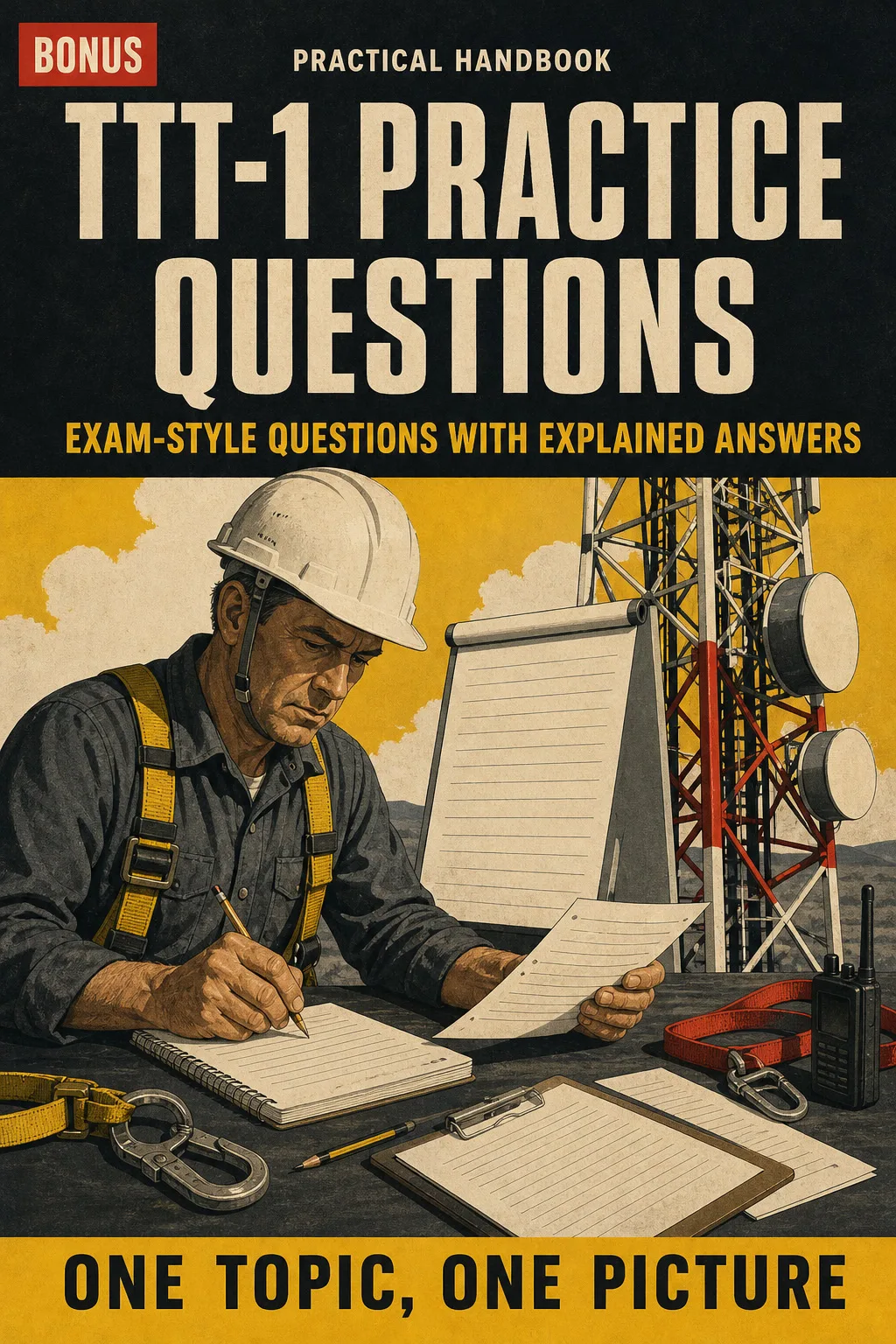
TTT-1 Practice Questions: Exam-Style Questions with Explained Answers

BONUS 1: «TTT-1 Practice Questions: Exam-Style Questions with Explained Answers»

Value on its own: US$ 17.90

Test yourself topic by topic and see why each answer is right, so you walk into the exam knowing what the questions look like.

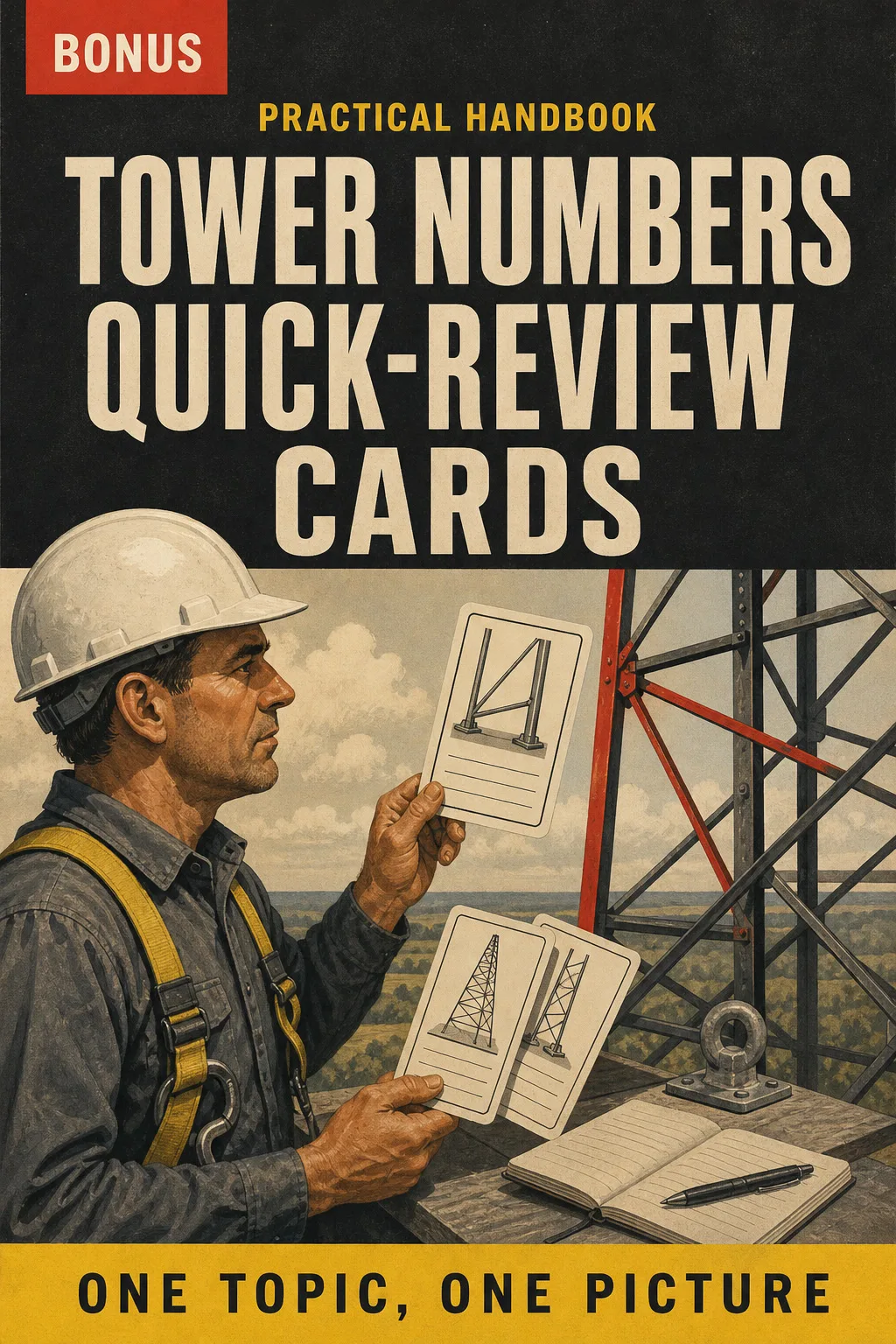
Tower Numbers Quick-Review Cards

BONUS 2: «Tower Numbers Quick-Review Cards»

Value on its own: US$ 14.90

Every number you need to know on one card each — anchor strength, clearance, fall factor, WLL, wind and RF limits — to review in the truck or before a climb.

Tower Technician Illustrated with 2 Free Books

  • Tower Technician Illustrated: 64 illustrated pagesUS$ 63
  • BONUS 1: TTT-1 Practice Questions: Exam-Style Questions with Explained AnswersUS$ 17.90
  • BONUS 2: Tower Numbers Quick-Review CardsUS$ 14.90
  • High-resolution PDF to printIncluded
Total value US$ 95.80
YOUR PRICE:
US$ 27
You save US$ 68.80
YES, I WANT TOWER TECHNICIAN ILLUSTRATED FOR US$ 27

📄 This is a digital PDF book sent to your email: nothing is printed or shipped.

Secure purchaseEncrypted payment30-day guarantee

PDF by email: We email you Tower Technician Illustrated as a PDF, together with the two free books. It's a single payment: no installments, no extra charges.

Who This Book Is For

You're studying for the TTT-1

You're studying for the TTT-1

Every topic of the written exam in order, one drawn page each, so you can review in the truck or at the hotel without wading through the CFR.

Your exam date is close

Your exam date is close

The exam review puts every number on one page and the clearance and rigging math in fixed steps, so you go over it the night before in one sitting.

You already climb for a living

You already climb for a living

You know the work; the book puts the why behind it: the clearance math, the WLL at each sling angle and the RF limits, drawn the way you see them on the tower.

Everything You Get Today

US$ 95.80US$ 27
YES, I WANT TOWER TECHNICIAN ILLUSTRATED FOR US$ 27

📄 This is a digital PDF book sent to your email: nothing is printed or shipped.

30DAYS
GUARANTEE

30-Day Guarantee

Try Tower Technician Illustrated for 30 days, bonus books included.

We refund everything if the file won't open, if the book isn't what you see here, if you were charged twice or if the email doesn't arrive. Just email us.

You pay once. No subscriptions.

Frequently Asked Questions

Is it for me if I already climb towers but never took the written exam?

Yes. It doesn't explain what a ladder is: it goes straight to what the written exam asks, like the OSHA limits, the clearance and fall factor math, WLL and RF limits, each one drawn.

Where does the content come from?

From OSHA 29 CFR 1926 (Subpart M) and 1910 (1910.140, 1910.268), ANSI/ASSP Z359, ANSI/ASSP A10.48, ANSI/TIA-222 and the FCC RF exposure rules (47 CFR 1.1310, OET Bulletin 65), checked against the editions in force when the book was written. The exam review lists every number with the section it comes from, so you can check it yourself.

Is this official material?

No. It's an independent illustrated study book, not issued or endorsed by the organization that administers the TTT-1, OSHA, ANSI, ASSP, TIA or the FCC. It doesn't give you the TTT-1 card or any certificate: you still take the exam through that organization. The book is for studying the written part.

Does it replace my climber training?

No. It's study material. It doesn't replace hands-on fall protection, climbing and rescue training, competent person oversight or your employer's authorization to climb.

Are the practice questions the real exam questions?

No. They're written for this book, in the style of a written exam, so you can test yourself topic by topic. They aren't official questions from any exam.

When and how do I get it?

The book and the 2 bonus books arrive as PDFs by email, at the address you enter at checkout.

Do I have to pay every month?

No. It's a one-time payment. No subscription.

Can I get it on paper?

We don't ship a printed book. It's a PDF by email, designed to print on regular letter paper, so you can print it and keep it in the truck, or read it on your phone at the hotel.

How does the refund work?

You have 30 days. We refund everything if the file won't open, if the book isn't what you see on this page, if you were charged twice or if the email doesn't arrive: just email us.

Before You Close This Page

No more rereading pages that don't stick.

The clearance ruler: you see it drawn, and that's it.

You walk into the exam knowing where everything is.

Drawings make studying faster.

The book is right below.

One-time payment: US$ 27 · Guarantee: 30 days · PDF by email

YES, I WANT TOWER TECHNICIAN ILLUSTRATED FOR US$ 27

📄 This is a digital PDF book sent to your email: nothing is printed or shipped.